Insights
How Central Banks Respond to Recessions: Interest Rates, QE and Emergency Tools Explained
Executive Summary
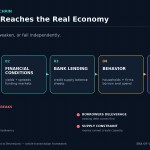
When a recession begins, most investors assume the central bank simply cuts rates and growth comes back. It’s a reasonable assumption, and it’s wrong often enough to matter. Central banks do not fix recessions directly....
Yield Curve Explained: Why an Inverted Yield Curve Signals Economic Trouble
Executive Summary
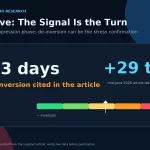
The yield curve is one of the most closely watched indicators in fixed income markets and one of the most systematically misunderstood by the investors who need it most. Most people know that an inverted yield curve...
How Recessions Are Measured: Why Official Data Comes Too Late for Investors
Executive Summary
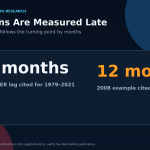
Most investors believe a recession begins when economists officially announce it. That belief is operationally dangerous. By the time the National Bureau of Economic Research publishes its recession declaration, the...
What Is Stagflation? Complete Guide to Understanding One of the Most Dangerous Economic Environments
Executive Summary
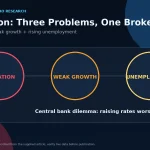
Stagflation, the simultaneous combination of high inflation, weak economic growth, and rising unemployment, sits at the most difficult intersection in macroeconomics. It is dangerous not because of any single dimension,...

Era CrisisMeter Explained: How to Measure Systemic Financial Risk Before Markets Break

Executive Summary
The Era CrisisMeter is the operational expression of the Era Global Risk Index, a composite updated daily that aggregates 24 structural macroeconomic and geopolitical indicators into a single score between 0 and 100...
What Is M2 Money Supply? Why Liquidity Drives Markets Before Inflation Appears
Executive Summary
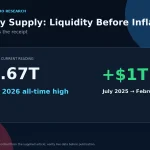
Most investors watch inflation. They track the monthly CPI release, study the Fed's preferred PCE measure, and try to read what consumer prices are telling them about the economy's direction. Professional macro investors...
How Political Events Affect Financial Markets: A Structural Approach to Political Risk
Executive Summary
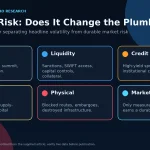
Political events can move financial markets. That observation, while accurate, is nearly useless without the more important question that follows: does this political decision change the structure of the financial...
What Causes Inflation? Why It's Harder to Stop Than You Think
Executive Summary
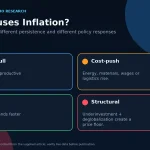
Most explanations of inflation start and end with monetary policy. Print too much money, get inflation. Raise interest rates, reduce inflation. The mechanism is real. The problem is that it explains cyclical inflation...

Era Global Risk Index: A New Framework for Measuring Systemic Market Risk
Executive Summary
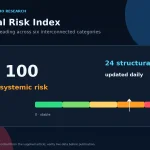
The Era Global Risk Index, what we call the EraCrisisMeter, is a proprietary macroeconomic indicator that aggregates 24 structural data points across liquidity conditions, credit markets, monetary policy, capital flows,...
Report of investment-analytical agency "Era of Changes" for 4 months of 2026 on executed forecasts (statement)

📅 01.05.2026
Paradigm shift: from trend catching to sniper precision
While past periods were characterized by a highly convex strategy with frequent small losses and rare large gains, the first 4 months of 2026 demonstrated a completely...